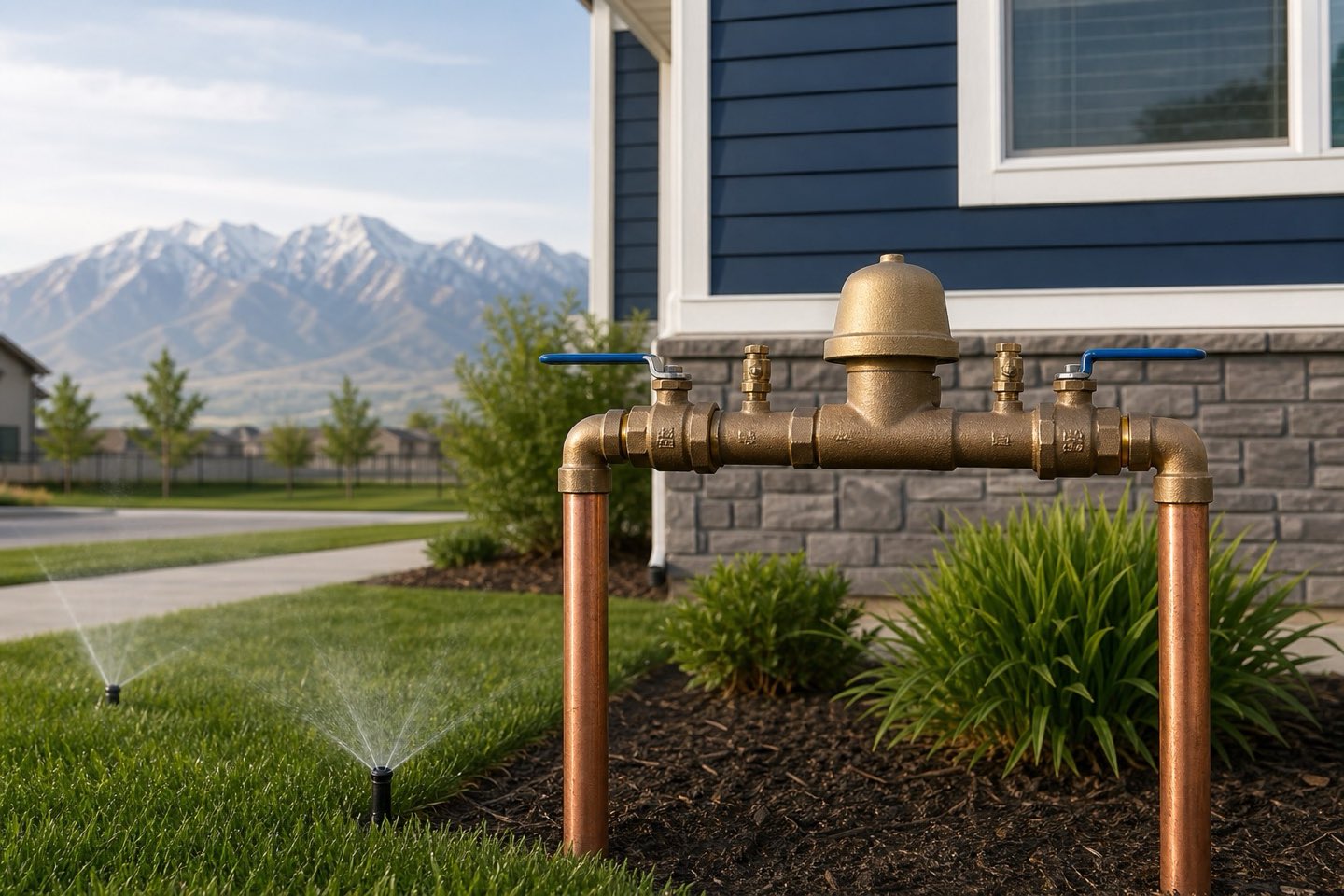
How do you find the device at home?
Look near the irrigation shutoff, side yard, garage, basement mechanical area, meter connection, or a green enclosure. A PVB often sits above ground on 2 risers with a central bonnet. An RPZ or DC can be horizontal in an enclosure or mechanical space. Do not enter a locked utility room, remove a sealed cover, or turn a valve merely to identify it. A wide photo plus a close tag photo is enough for initial routing.
Record the manufacturer, model, nominal size, serial number if visible, pipe orientation, and whether the device is above ground, below grade, or inside. Note a leak, frost crack, missing handle, inaccessible test cock, or standing water. The tester still confirms the assembly on site; your photos reduce wrong assumptions and help estimate access, not replace the certified test.
What if the notice says a device exists but you cannot find it?
Ask the sender for the recorded device type, location description, serial or asset number, prior test date, and the account or meter tied to it. A prior owner may have enclosed, moved, or removed irrigation equipment. A record can also be assigned to a common HOA device rather than an individual yard. Do not pay for a replacement until someone reconciles the record with the physical connection.
In West Jordan, call Water Operations at 801-569-5700 when the city’s record is unclear. If the notice points to Jordan Valley Water Conservancy District, call 801-446-2000. The property address alone does not establish the filing recipient when wholesale, district, commercial, or separately metered connections are involved.
What happens during a residential appointment?
Clear about 3 feet around the assembly, secure pets, unlock ordinary access, and stop sprinkler scheduling during the window. The state-certified tester identifies the assembly, checks visible condition, isolates the downstream side, connects a calibrated gauge, and takes the required readings. Routine testing usually takes 20–40 minutes. Water to the served line is off briefly; for many homes that means irrigation rather than indoor fixtures.
After the reading, the tester restores valve positions, checks for obvious leaks, explains pass or fail, completes the accepted report, and files it with the city or district. Ask for your copy and next due date. If the device fails, do not authorize an undefined repair. Request the failed value, affected component, repair scope, retest charge, and replacement comparison in writing.
How much does a home test cost?
A northern Utah guide updated February 8, 2026 lists $100–$200 for a residential test. The 2026 national BackflowRates guide lists $75–$150 or more. The Utah range is the more relevant comparison, while the national range helps identify outliers. The service provider supplies the written quote after the device count, address, access, and filing route are known.
Ask whether the price includes 1 assembly, travel, the field test, report completion, filing, and a customer copy. Ask separately about crawlspace or enclosure access, after-hours work, missed appointments, filing fees, a failed-test retest, and repairs. A $90 headline can cost more than a $140 complete test when required filing and travel appear later.
Who pays at a rental or HOA property?
The water provider’s notice and property records identify the responsible account or owner, while a lease or HOA declaration may allocate the cost between owner, tenant, manager, or association. The tester should not decide a private lease dispute. Send the notice to the owner or manager promptly, identify which property or common system the assembly serves, and avoid letting an internal payment question consume the compliance deadline.
For a managed property, put the authorizing contact, billing contact, site-access contact, and report recipient in the request. If the assembly serves common landscaping, confirm whether the HOA holds the water account. Keep 1 shared packet with the notice, quote, result, invoice, filing proof, and next date so staff turnover does not erase the history.
What should happen before winter?
Outdoor sprinkler assemblies face Salt Lake Valley freezes. The typical first-frost window is around October 21–31, which is why local blowout scheduling centers on October. Water trapped in test cocks, ball valves, check cavities, or exposed risers can crack parts and create a spring failure. A decorative foam cover does not replace the manufacturer’s drainage and valve-position instructions.
Our recommendation is to test early enough that a borderline device can be repaired before both irrigation startup and the city deadline collide, then winterize before the first hard freeze. When the annual due date falls in winter, tell the scheduler whether the system is already drained. Testing a dormant system may require water activation and a second winterization step, both of which can affect price.