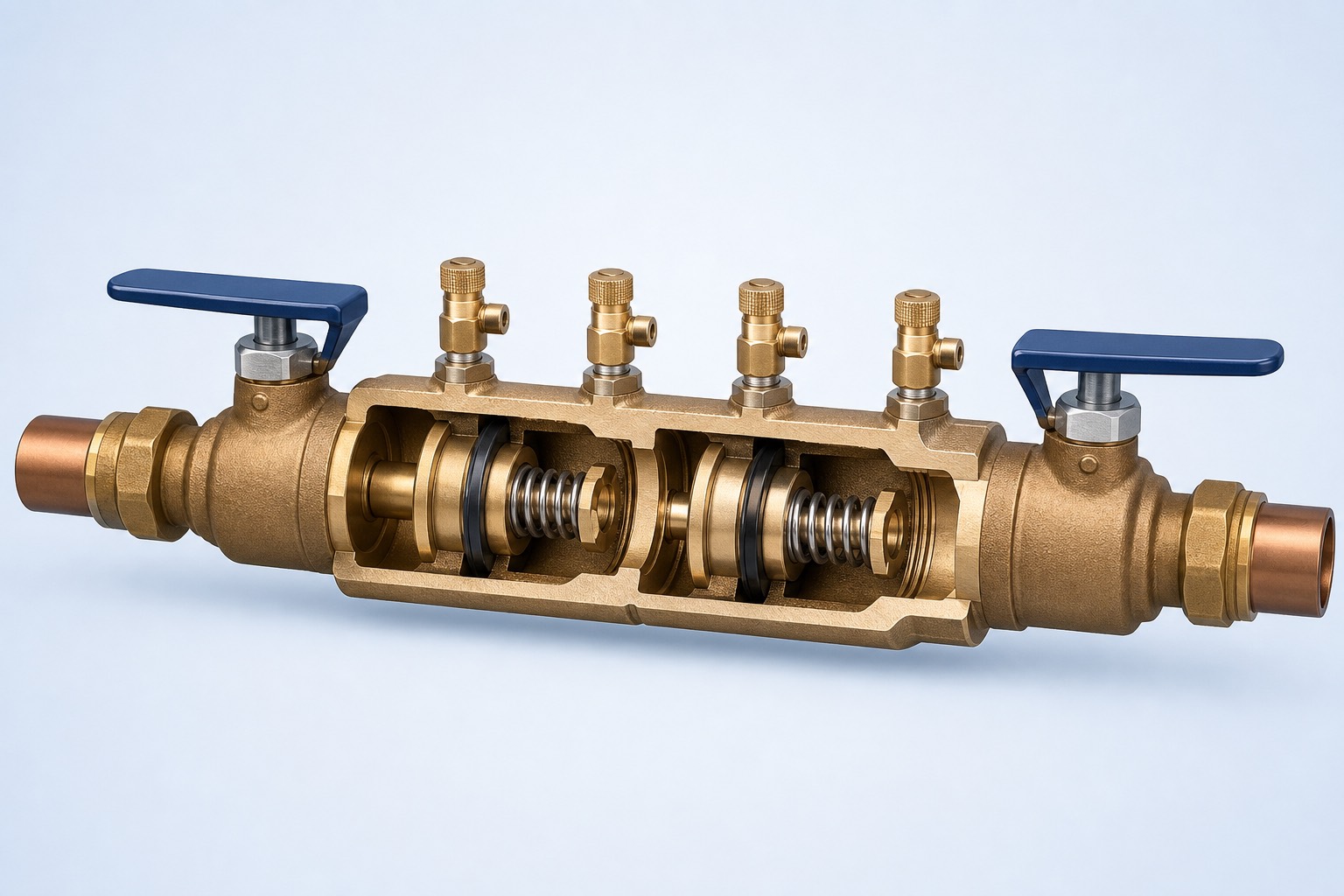
How do you choose between PVB, DC, RPZ, and SVB?
The hazard and hydraulic conditions choose the protection category. A PVB protects against backsiphonage in many irrigation uses and must sit above downstream outlets. A DC has 2 checks and addresses low-hazard backsiphonage and backpressure applications. An RPZ adds a monitored relief zone for higher hazards and needs a safe discharge location. An SVB is a spill-resistant vacuum breaker for selected backsiphonage conditions and is not a universal swap for an RPZ.
Do not replace by appearance alone. Read the tag, record the manufacturer, model, size, orientation, elevation, pipe material, water source, and nearby drainage. Then confirm the approved type with the water provider and qualified installer. Riverton’s dual culinary/secondary rule, for example, calls for an RPZ on the culinary side plus a swing joint; a secondary-only connection follows a different path.
What should a complete replacement quote include?
A useful quote identifies the approved device, size, shutoff valves, unions or adapters, enclosure changes, drainage or air gap, supports, freeze-protection plan, excavation or wall work, water shutdown, permit or inspection responsibility, removal, initial test, report filing, and customer proof. It should also state what happens if existing piping, pressure, clearance, or cross-connection conditions do not match the visible assumptions.
Ask whether the old assembly can be isolated without shutting down the entire property, whether the new unit remains serviceable in line, and where RPZ discharge will go. A compact valve that cannot be tested, drained, or repaired without demolition is a poor long-term bargain. The lowest bare-device price can create the highest future service cost when access is ignored.
What does replacement cost in 2026?
HomeAdvisor’s June 20, 2026 national guide reports an average around $350 and a common $150–$450 range for preventer installation or replacement, with sprinkler or sewer units from $100–$600. A northern Utah guide says residential parts begin around $250 and commercial assemblies can run into the thousands. RPZ replacements, large sizes, drainage, enclosures, excavation, and plumbing corrections often exceed basic national figures.
Treat those figures as comparison data, not an advertised West Jordan total. The written quote comes from the service provider after the device, size, access, hazard, and filing requirements are known. Require separate visibility into the device, installation labor, special materials, initial test, filing, permits, and optional freeze protection. That makes a $450 quote and a $900 quote comparable instead of merely different.
What installation mistakes cause the next failure?
Wrong orientation, inadequate elevation for a PVB, an RPZ without safe drainage, inaccessible test cocks, strained pipe alignment, unsupported weight, buried testable components, missing clearance, trapped water, and a device exposed to freeze conditions can all undermine a new installation. A listed assembly still has model-specific installation instructions. The water provider may add approved-device, location, reporting, or inspection requirements.
West Jordan’s published landscape standards for development and parks name RP assemblies and specific models, require an initial test within 10 days, and send reports to Parks; those standards must not be generalized to every home. For a residential property, confirm the actual city or district requirement for that connection rather than copying a parks specification into a backyard.
When does the new device get tested and filed?
Testing belongs at the end of the installation, before the compliance task is considered complete. South Jordan and West Jordan’s published landscape standards use a 10-working-day or 10-day initial-test window in their stated scopes. Riverton requires testing at installation. The exact form and recipient follow the local program, and an inspection may be separate from the certified field test.
Keep the approved model information, installation invoice, initial passing test, filing confirmation, photos showing accessible final placement, and the next annual date. If an enclosure or insulation is added later, preserve service access and do not hide the relief outlet. A future tester should be able to identify, isolate, drain, connect a gauge, and read the tag safely.
How do you protect the replacement from Utah freezes?
Choose the protection plan before the first October cold snap, not after the new valve is full of trapped water. A removable body, unions, properly positioned shutoffs, functional drains, and manufacturer-approved winterization sequence can reduce exposure. Heat tape, improvised covers, or insulation can introduce fire, moisture, or access problems and may not protect internal cavities during a hard freeze.
The Salt Lake County first-frost window commonly falls around October 21–31, so many sprinkler blowouts occur in October. Schedule early enough to leave room for a failed shutoff or drain correction. After winterization, keep the annual test timing and spring startup plan clear; valve handles left for freeze protection must be restored correctly before normal operation.