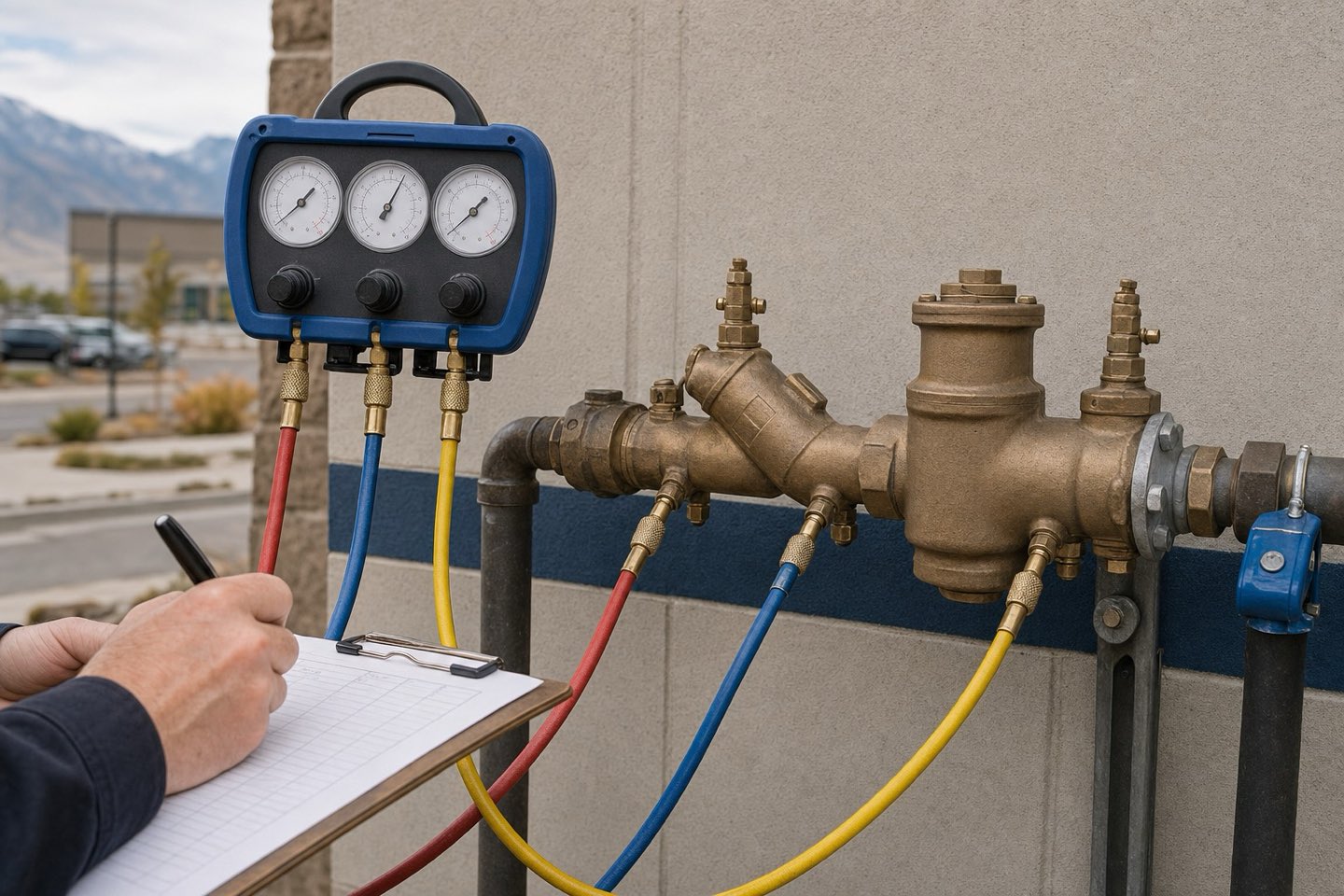
What belongs in the assembly inventory?
List each device by property, building, account or meter, served system, location, type, manufacturer, model, size, serial or asset number, last test, due date, filing destination, access condition, and shutdown effect. Add a photo and a simple location note such as “north mechanical room, domestic cold-water riser.” Avoid vague rows like “backflow near loading dock” when 3 devices share that area.
Reconcile the inventory with every city or district notice before scheduling. A missing assembly can trigger a follow-up even when all visible devices passed. A retired device should have documented provider approval rather than being silently removed from a spreadsheet. Multi-tenant sites should identify which account owner receives notices and who retains the result after management changes.
How should shutdowns and access be planned?
For each assembly, identify what loses water, how long it can tolerate interruption, who authorizes the shutdown, and what must be restored or checked afterward. Restaurants, clinics, boilers, cooling equipment, irrigation controllers, production lines, multifamily buildings, and fire systems have different consequences. A 20-minute field sequence can still require a larger operational window when escorts, keys, notices, or system resets are involved.
Give the tester safe clearance, lighting, drainage, and access to all test cocks and shutoffs. Flag pits, ladders, roofs, confined areas, traffic, locked enclosures, active leaks, hazardous processes, or devices above comfortable working height. Photos help price access, but the service provider confirms site safety and whether another qualified party or equipment is required.
What does commercial pricing depend on?
Device count and size, travel between buildings, access, test duration, minimum charges, fire-system coordination, after-hours windows, report formats, filing destinations, retests, and repairs all affect price. Denver Backflow Specialists publishes a useful non-Utah comparator: $125 for 1/2- to 3-inch devices, $150 for 4- to 7.5-inch, and $175 for 8-inch and larger units, plus separate travel or access fees.
Those Denver numbers are not a West Jordan quote. They show why “price per test” needs size and inclusions. Ask for a schedule by assembly, the total base-test amount, filing and customer-copy handling, after-hours or missed-access rules, and the authorization ceiling for any diagnostic work. Repairs should never be silently multiplied across an inventory without individual failed readings.
How are fire-line assemblies different?
A fire-line backflow assembly can interact with monitored valves, alarms, fire pumps, supervisory switches, and impairment procedures. The backflow tester’s certification does not automatically grant authority to disable or restore every fire-protection component. Identify the fire-system contact, alarm company, monitoring requirements, and any licensed fire-protection role before the test window.
The assembly type and shutoff arrangement can also differ from a small irrigation valve. Large OS&Y or butterfly shutoffs, detector assemblies, and drainage requirements affect access and time. Do not schedule a fire-line test as a generic after-hours water shutoff. A written plan should name who controls the impairment, who watches the system, and who confirms restoration.
What happens when 1 of several devices fails?
Keep the passing results moving to their correct filing destinations while the failed assembly enters a separate diagnosis and authorization track, unless the local program instructs otherwise. The failed record should identify the device and measured component. One bad check on a 1-inch irrigation RPZ should not turn into an undefined repair authorization across 8 domestic and fire devices.
Request a repair option, replacement option when warranted, retest schedule, operational impact, and filing correction for the failed unit. KID and Riverton explicitly require testing after repair. For facilities with purchasing controls, decide the dollar threshold and approver before the visit so a small serviceable part does not wait through a avoidable procurement delay.
What proof should facility managers retain?
Retain the notice, master inventory, appointment scope, visitor log when required, each test form and reading, tester certification information, calibration record when supplied, failed-device photos, repair authorization, passing retest, submission confirmation, invoice, and next due date. Map each document to the same device identifier. A folder of unlabeled PDFs is not an audit trail when 12 assemblies share similar model numbers.
Use the district’s accepted form and destination. Riverton accepts email filing; KID says the tester submits results; South Jordan records results with Public Works. West Jordan’s available material says reports go to the city but does not publish the full notice mechanics, so confirm at 801-569-5700 for city accounts. Separate JVWCD-metered connections may follow JVWCD’s program.