How do you verify that TBID is your district?
Check the notice header and water bill, then call TBID at 801-968-9081 with the service address. Ask which assembly is recorded, the current deadline, accepted form, report route, and whether the tester must appear on a district list in addition to holding Utah certification. Do not use a city hall phone tree as the primary program contact when the district owns the record.
If TBID does not serve the address, ask which utility does before arranging the visit. Most-of-area wording is deliberately cautious; improvement-district boundaries do not always follow city limits. Save the contact confirmation with the notice so a property manager or future owner understands why that program received the report.
What authority does TBID publish?
TBID’s program material describes hazard surveys, inspections, penalties or fees, and disconnection authority. That means ignoring a notice can have consequences, but the available source does not verify a universal deadline, automatic shutoff sequence, or fixed fine amount for every property. Use TBID’s exact notice and official contact instead of repeating a neighbor’s enforcement story.
When a date is unclear, call 801-968-9081. Ask what happens after the current notice stage and what closes the record: a passing test, repair and retest, survey, device correction, or another document. A specific answer from the district is more useful than a dramatic but unsupported threat.
How should you choose a tester for TBID?
Start with TBID’s published tester list and confirm the individual’s current Utah Backflow Assembly Tester status through WaterLink. Ask whether the quoted price includes the field test, TBID report, and customer copy. A company name on a list does not replace confirming who will arrive, which certification applies, and who files the result.
A routine home test often lasts 20–40 minutes. Use $100–$200 as a northern Utah February 2026 comparison, not a guaranteed TBID price. Device count, size, access, travel, filing, winter activation, retesting, and repairs can change the written total.
What if the TBID assembly fails?
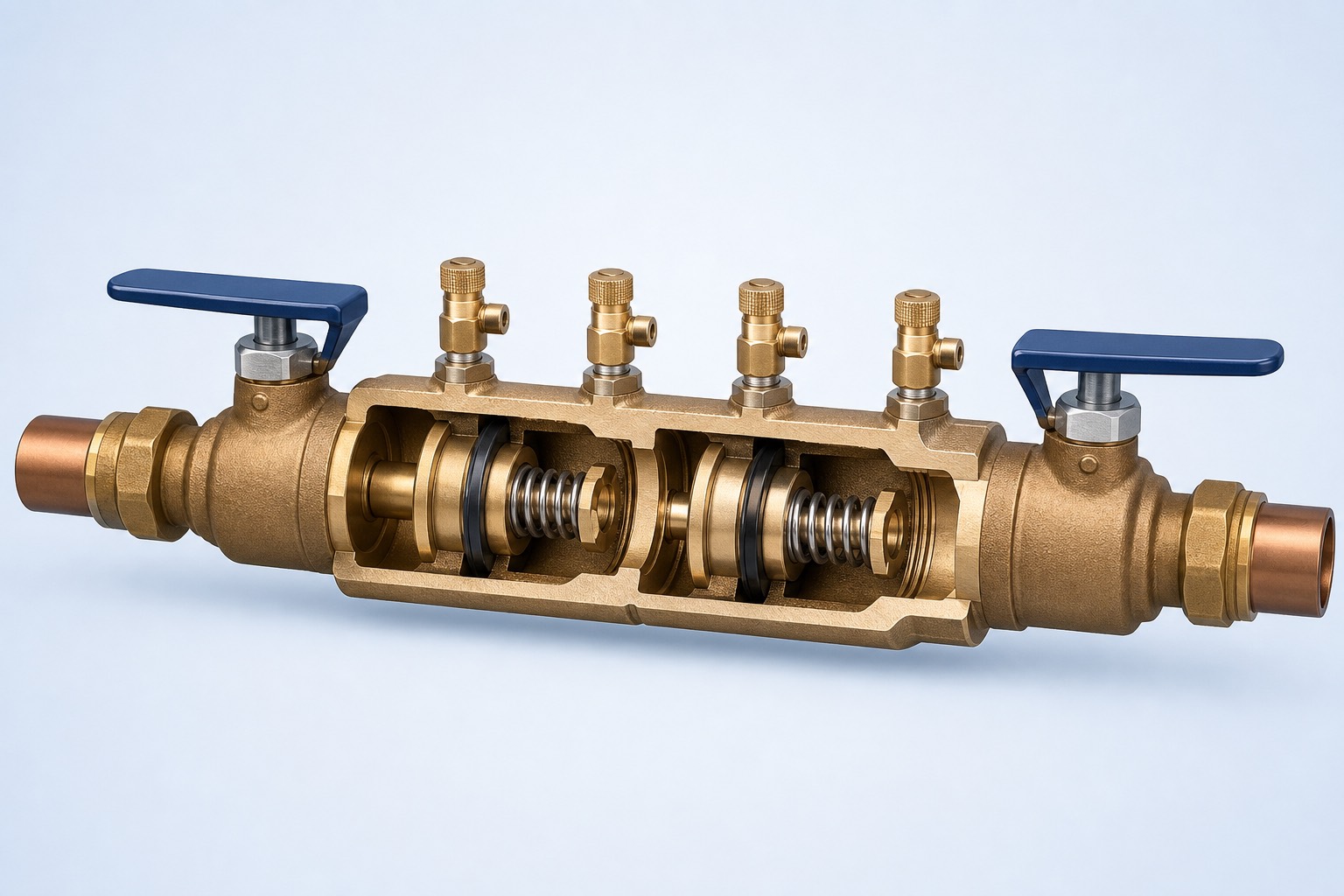
Request the failed reading and component before any repair authorization. A worn disc, debris, spring, shutoff, freeze crack, or wrong installation can point to different work. If repair is chosen, the assembly needs a passing retest and the updated result must reach TBID. If replacement is proposed, confirm the approved type and final filing steps with the district.
Do not let enforcement wording collapse every decision into emergency replacement. Compare the full repair + retest + filing scope against the full installed replacement + initial test + filing scope. National June 2026 replacement data commonly shows $150–$450 with about $350 average, but RPZ and complex work can be substantially higher.
What proof should a Taylorsville-area owner retain?
Keep the original TBID notice, address or account confirmation, test form with readings, tester certification information, filing proof, invoice, repair authorization, passing retest, and next date. For a rental or HOA, store the packet with the water account rather than in one tenant’s email.
If another notice arrives, contact [email protected] or 801-968-9081 with the test date, device ID, and tester. First determine whether the issue is nonreceipt, a mismatched assembly, an incomplete form, or an unresolved failure. Another field test is not the first fix for a clerical mismatch.