What should you confirm with Midvale first?
Give Public Works the service address and ask which assembly is recorded, where it is expected to be located, the notice deadline, accepted test form, filing destination, and whether a repair, relocation, or replacement creates another test requirement. This is especially useful when the first notice arrives after years without one or the device cannot be found.
If a prior owner or property manager completed a recent test, provide the date and tester rather than booking a duplicate immediately. Midvale may be able to match a result that used a different account or device description. Keep the city’s answer with the property record.
How do you verify a Midvale tester?
Use the Utah WaterLink commercial tester list linked by Midvale, then match the person who will perform the test. Utah certification requires an approved course and ABPA exam. Repair or installation may require additional DOPL licensure, so ask which person and qualification covers each proposed task.
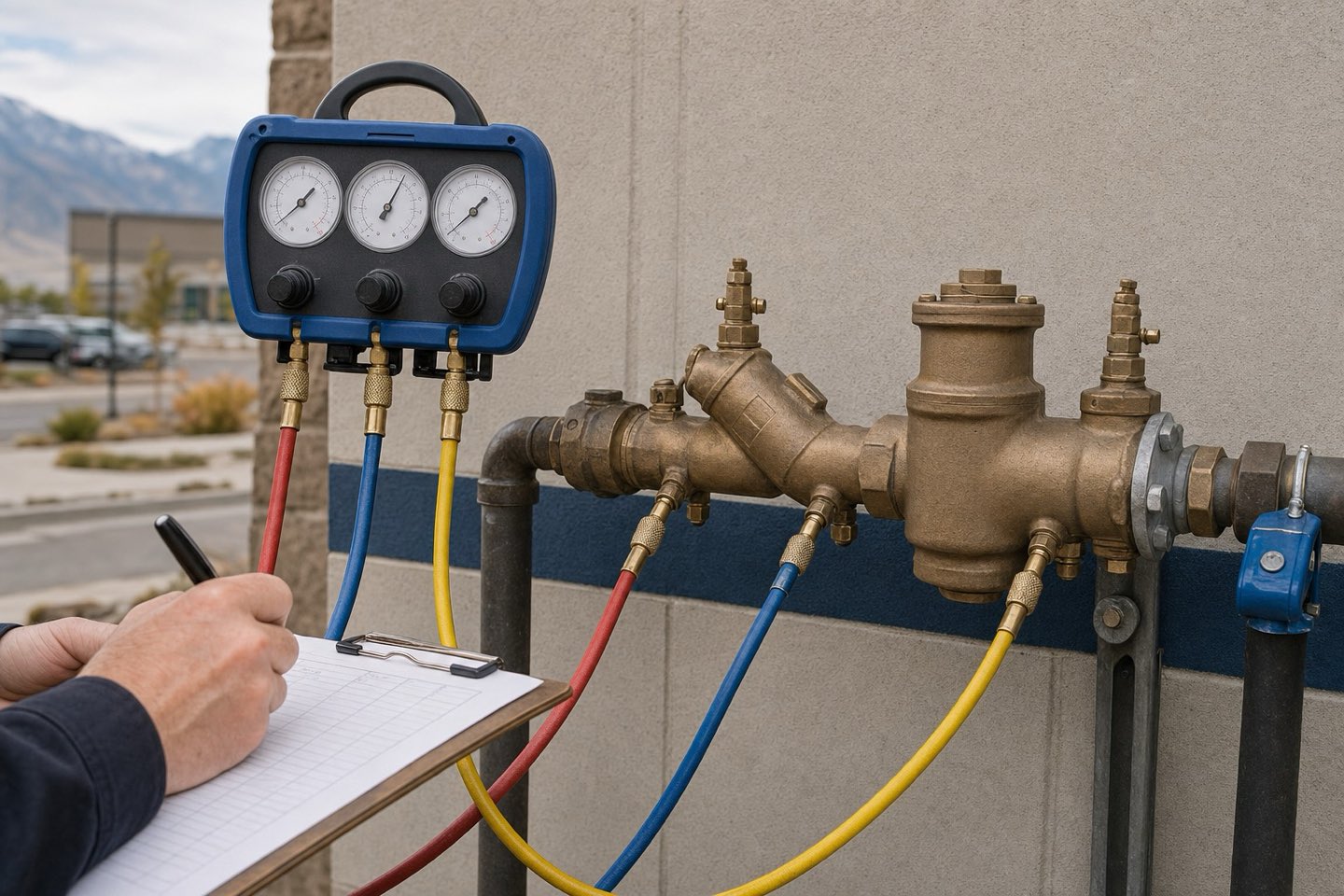
The field test commonly takes 20–40 minutes for 1 accessible residential assembly. Ask whether the written quote includes the test, Midvale filing, and your copy. Add access, multiple devices, after-hours work, retesting, and repairs only when they are part of the actual scope.
What should the Midvale report show?
The result should match the property and assembly record, include the device type, size, model or serial when required, test date, measured values, pass or fail, tester identity and certification, repairs, passing retest, and current recipient fields. Review it before filing proof disappears into an inbox.
Ask for the completed form and submission confirmation when available. If Midvale later cannot find the report, contact Bryton Mecham with the device ID, test date, tester, and your copy. Determine whether the issue is a clerical mismatch or a missing passing result before authorizing another visit.
What if a Midvale assembly fails?
The tester should show the failed reading and identify whether debris, rubber, spring, shutoff, relief behavior, freeze damage, or installation condition drove the result. Repairs need authorization and a passing retest. For a cracked or obsolete unit, compare a compliant installed replacement with the complete repair path rather than the bare retail valve price.
Use sourced ranges as a check: $100–$200 for northern Utah residential testing in February 2026, and national replacement data averaging about $350 with a common $150–$450 band. Midvale access, device type, plumbing, initial test, and filing determine the actual written quote.
How can Midvale owners avoid next year’s surprise?
Store the notice, city contact, report, readings, filing proof, invoice, and next annual month in 1 property folder. For an HOA or rental, assign the reminder to the owner or manager rather than a departing tenant. If the device is outdoors, add an October winterization task before the typical October 21–31 first-frost window.
A reminder should lead to verification, not automatic payment. Confirm that the device, account, and district remain the same, especially after irrigation work, a remodel, ownership transfer, or a water-source change. A stable record makes the next annual test routine instead of mysterious.