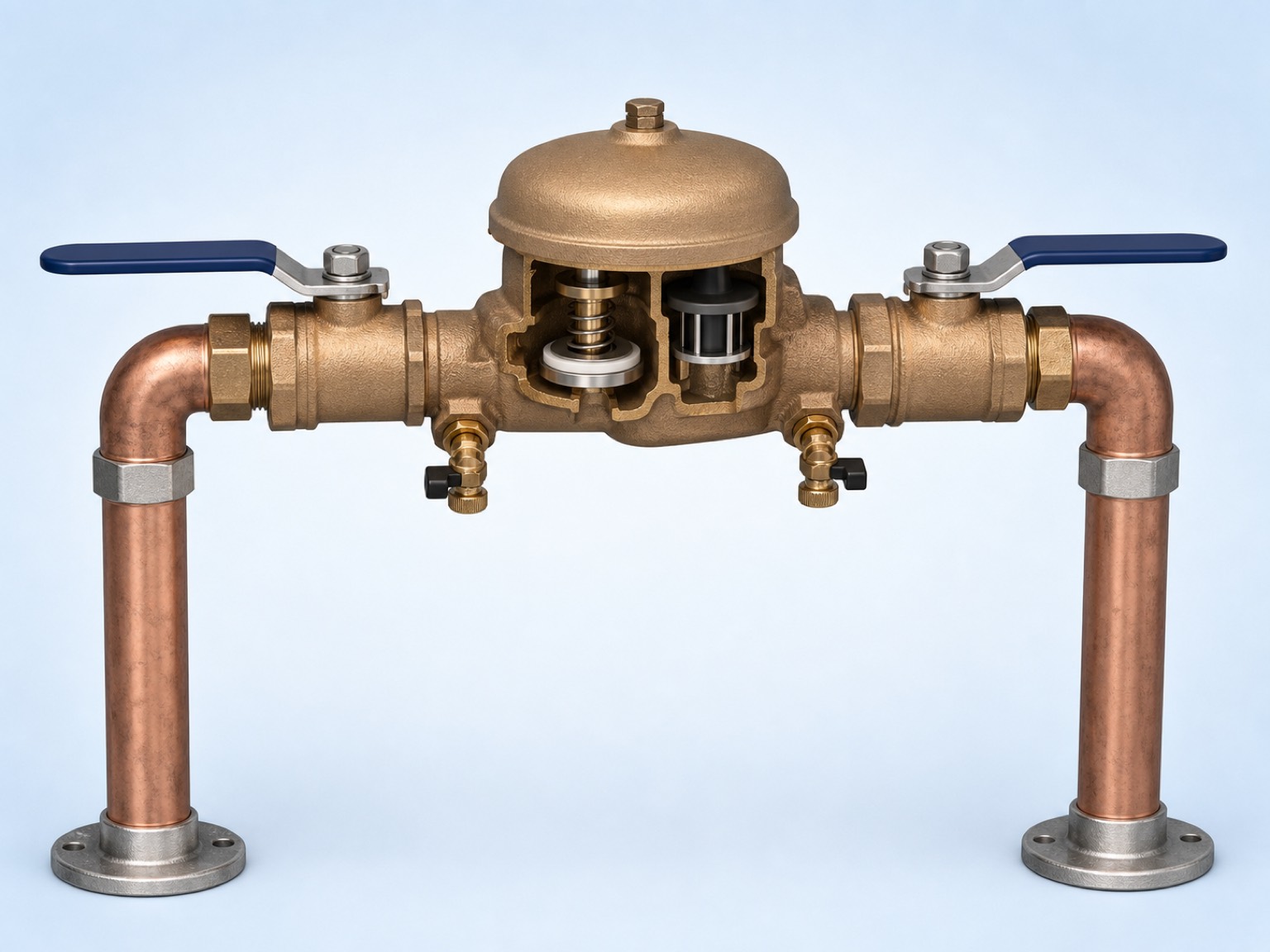
Why does KID require testing after any repair?
A repair changes the very parts whose pressure performance the test measures. KID requires an immediate test after repair, maintenance, or relocation so the record shows that the device returned to passing operation. The invoice proves work occurred; the passing differential readings prove the assembly’s tested function after that work.
Keep the original failed result, repair authorization, passing retest, tester submission proof, and next annual date. If a device is relocated, add photos and final location information so KID’s inventory does not continue pointing to the old site.
What can repeat failures mean in Kearns?
KID says repeat failures may lead to more frequent testing or replacement. That is more specific than a vague annual rule. A device that repeatedly collects debris, freezes, loses spring performance, or sits in a bad installation condition may need a root-cause decision rather than the same repair each year.
Ask the tester to compare 2 or more reports by component and reading. If the same check repeatedly misses, evaluate the body, water conditions, part availability, winterization, pressure, and installation. If different components fail, the complete repair history can still make an approved replacement the more stable economic choice.
Why are KID air gaps treated differently?
KID’s published backflow information says air-gap setups need visual checks. An air gap is a physical separation, not a testable valve with check springs and test cocks. The inspection confirms that the separation remains open, correctly positioned, and not bypassed by a hose, tube, or altered outlet.
Do not order a gauge test for an air gap or assume every visible gap is compliant. The district determines the required dimensions and application. If a flexible line bridges the separation or the receiving vessel’s flood level changes, the protection can be defeated even though no mechanical part has failed.
Who files a Kearns test result?
KID explicitly assigns submission to the state-certified tester. Ask for your customer copy and whatever submission proof is available. Review the Kearns service address, account or asset information, assembly identity, date, readings, tester certification, repairs, and final pass status before storing it.
If KID cannot locate the result, call 801-968-1011 with your copy, test date, tester, and device ID. Separate a missing report from a failed assembly that never passed retest. The first can be a delivery or matching problem; the second still needs corrective work and measurement.
What should Kearns testing cost?
Use the February 2026 northern Utah $100–$200 residential range as a comparison for 1 routine accessible assembly. Ask whether the test, KID submission, and customer copy are included. A post-repair retest, multiple devices, access, travel, winter activation, or a repeat-failure diagnosis can add cost.
For replacement, national June 2026 data averages about $350 and commonly spans $150–$450, with some sprinkler units from $100–$600 and commercial or RPZ work higher. The service provider supplies the written Kearns quote after the device and failure history are known.